Six hours ensconsed in the chairstore slaving over the lathe. Have managed to produce 52 wheels which should equate to 26 runners. Given a 12" spacing and the endpoints being on fixed and master runners then this gives a total coverage of 15' per drape. I'll have to get the drapes out of their bags tomorrow and count the number of hooks so that I can ensure the exact number are done.
Plan for this weekend is to make the runners, Padua flats and the truck mechanisms. Aiming for the Padua flast to be assembled on Sunday, which means a fair degree of shaping need to be done on Saturday once more people are present.
Sat down with Dave G. and talked through the setup plan:
| Monday | 18th | 19:30 | Act X runthrough in UCH, some show crew required. |
| Tuesday | 19th | 19:30 | Act X runthrough in UCH, some show crew required. |
| Wednesday | 20th | 18:30 | Set dismantle and final kit prep. |
| Thursday | 21st | 12:00 | Kit move to UDH, truck load. |
| Friday | 22nd | 08:00 | Unload Truck |
| 09:00 | Breakfast | ||
| 09:30 | Set Assembly | ||
| Saturday | 23rd | 08:00 | Breakfast |
| 09:00 | Set Assembly | ||
| 21:00 | Drape painting, overnight drying | ||
| Sunday | 24th | 08:00 | Breakfast |
| 09:00 | Set Assembly | ||
| 13:00 | Set Change dry run after lunch | ||
| 17:30 | Welcome Meeting | ||
| 18:00 | Crew break for supper | ||
| 19:00 | Onstage Rehearsal, show crew required (see Note 1) | ||
| 22:00 | Lx Focus | ||
| Monday | 25th | 08:00 | Breakfast |
| 09:00 | Set Assembly | ||
| 13:00 | Set Change dry run after lunch | ||
| 18:00 | Crew break for supper | ||
| 19:00 | Onstage Rehearsal, blank stage (see Note 2) | ||
| 22:00 | Lx Plot | ||
| Tuesday | 26th | 08:00 | Breakfast |
| 09:00 | Sits, probably in the School Hall | ||
| 12:00 | Everyone breaks for lunch | ||
| 13:00 | Setup band in PH, sound check. | ||
| 14:00 | Safety Talk | ||
| 14:30 | Tech rehearsal (see Note 3) | ||
| 15:00 | Band dismissed | ||
| Wednesday | 27th | 08:00 | Breakfast |
| 09:00 | Call for dress | ||
| 10:00 | Dress Rehearsal | ||
| 16:00 | Cleanup | ||
| 18:00 | Final FOH Checks | ||
| 19:00 | Preformance |
Note 1:
Onstage rehearsal with some crew present to allow set changes to occur. Preferably this should be done as a whole show runthrough with minimal stops so that the cast can get a feel for the set, the crew can get a feel for how quick some of the changes have to be, etc...
Note 2:
Onstage rehearsal with blank stage to allow choreography to be practiced.
Note 3:
Tech rehearsal to begin with the top of both acts whilst the band are present so that the crew can get the hang of any cues in the overture, etc... Band will then be dismissed.
First full weekend of set building. Slow start on Saturday, since the chairstore needed a degree of cleaning before we could even start work. Also held up by the fact that someone has broken the mitre saw. The casting which the bearings supporting the blade shaft attatch to has been broken, so the entire drive shaft is now loose. Given the damage to the handle I suspect that somebody has dropped it. I'll be requesting Dramsoc buy me a new Mitre Saw at some point next week!
Close of play Saturday has two trucks built, with 90% of the wood cut for the remianing pieces. Sunday saw all 6 of the trucks assembled before lunch and the boltholes for the wheels being drilled. Started work on preparing the door support flat when I realised that we're probably short 36' of 45x45mm timber. It didn't stop work over the weekend, but I'll need to get more from FTM over the course of the next week.
Trucks assembled into two strips of three, and jointed with 6 loose pin hinges per truck. The trucks roll pretty smoothly and straight. Motive force does have to be applied equally to both ends otherwise there is a tendency to pivot around the far corner. Sightlines look to be good, even with a door in position.
It's been like Christmas all over again in the Putney flat, boxes and boxes of bits have been arriving. Tools from Axminster, on three separate days. Have acquired numerous forms of lubrication to get the lathe up and running again. Dust extraction, compressor, spray guns and stapler. RS supplied the plastics for making up the tab runners.
In college the acrylic for the lightboxes has arrived, as have the drapes from J&C Joel. Wood order arrived this afternoon and has been moved up to the Concert Hall. The extra money spent on the planed wood was worth it and it looks like it's be a treat to work with compared to the warpped pieces of damp we usually end up with.
Got the lathe wired up, but need to cut down the Nylon rod before I can try machining it. For that I need the engineering vice and a hacksaw, the former of which is still lurking in my garage.
Plan of attack tomorrow is to spend a little while cleaning the chairstore so that there's space to work. Get the saw set up with the vacuum running. Whilst that is happening someone needs to start marking out the wood. I've printed off a cutting list and reprinted the modified dressing room plans.
Back from a meeting with Caisley in Brussels.
Placed Axminster order, should arrive Monday or Tuesday, although the compressor will follow later. Need to work out how I'm going to get it all into college!
Placed wood order. Total inc VAT £398.64, ex VAT £339.27.
More drawings... I think I've finally finished all of the drawing required for the truck which will the first batch of work, and for the tab runners. Priced up all the bits required for the tab runners and it's just under £50.
Props list has been produced. Need to work out how to get hold of a chaise for Lilli's dressing room, since we'll have to get a van to move decks we may be able to use that to pick up Sue's chaise from Oval. Need to chase Steve King regarding deck availability and other kit clashes during the summer.
Flints and Screwfix orders have arrived, the acrylic sheet is due on Thursday. Drapes are on order and have obtained order numbers for the artifical trees. Need to place Axminster and RS orders next week. Need to add a set of thread cutting dies to the Axminster order.
Now that Kate is running again need to finish tidying up the chairstore and work out which tools are required there and which tools are required in the garage for ongoing maintenance.
Finalised the plans for the truck mechanism and sent them down to the printer. Also sent the truck general assembly and door support drawings down to the printer. Getting hacked off with drawings but there's probably another 20 to go.
Transcribed the rude word sketch for the Concert Party. It's somewhat crude, but someone is bound to find the crudeness amusing.
| Quantity | Description | Price | Total | |||||
|---|---|---|---|---|---|---|---|---|
| 1 | Axminster Spray Gun Starter Kit Product Code: 02162 | £24.95 | $24.95 | |||||
| 1 | Stabila 70T Torpedo Level Product Code: 073007 | £8.20 | £8.20 | |||||
| 2 | Axminster Toggle Clamp Type C 30mm Travel Product Code: SH36080 | £13.81 | £27.61 | |||||
| 1 | Ground HSS Twist Drill 4.0mm (Pkt 5) Product Code: 5NGDB4 | £1.02 | £1.02 | |||||
| 1 | Ground HSS Twist Drill 5.0mm (Pkt 5) Product Code: 5NGDB5 | £1.33 | £1.33 | |||||
| 1 | Lever Operated Grease Gun Product Code: 541004 | £9.28 | £9.28 | |||||
| 1 | CMT Bevel Trim Cutter - D=21.5mm - X=22mm - K=11.25° - S=1/2" Product Code: 857504 | £26.20 | £26.20 | |||||
| 1 | Nylon Coiled Air Line Hose 25' c/w Fittings Product Code: AA1012CF | £9.40 | £9.40 | |||||
| 1 | The Amateur's Lathe Product Code: ALATHE | £8.95 | £8.95 | |||||
| 1 | Perform BB100 Dust Extractor Product Code: BB100 | £89.95 | £89.95 | |||||
| 1 | Cutting Guide 2.5m Product Code: CE51 | £19.74 | £19.74 | |||||
| 2 | 1/4" BSP Female Swivelling Fitting Product Code: E120F | £3.98 | £7.97 | |||||
| 1 | Axminster Extreme Compressor 240v Product Code: EXT3502 | £239.92 | £239.92 | |||||
| 1 | 3-IN-1 Flexcan 200ml Product Code: HOW31LG | £2.78 | £2.78 | |||||
| 20 | Disposable Foam Earplugs Product Code: LL30 | £0.21 | £4.23 | |||||
| 1 | Titebond Original Wood Glue 3.8l(1 US Gallon) Product Code: LS5066 | £16.79 | £16.79 | |||||
| 1 | Axminster Machine Cover - 1420mm x 1830mm(56" x 72") Product Code: MC5672 | £22.48 | £22.48 | |||||
| 1 | Ground HSS Twist Drill - Diam=8mm,L1=75mm,L2=117mm Product Code: NGDB8 | £1.10 | £1.10 | |||||
| 1 | Rocol RTD Thread Cutting Compound - 50g Product Code: ROC53020 | £2.96 | £2.96 | |||||
| 1 | Axminster SG93 HVLP Spray Gun & Regulator Product Code: SG93 | £68.15 | £68.15 | |||||
| 2 | Axminster Toggle Clamp Type B - Reach=15-50mm Product Code: GH201B | £8.74 | £17.48 | |||||
| 1 | Rocol Sapphire 2 - 400g Product Code: ROC12171 | £4.64 | £4.64 | |||||
| 1 | Rocol SL Spray - 400ml Product Code: ROC34035 | £9.34 | £9.34 | |||||
| 1 | Rocol WD Spray - 300ml Product Code: ROC34271 | £7.23 | £7.23 | |||||
| 1 | 35 Piece Wood Boring Set Product Code: 010043 | £24.95 | £24.95 | |||||
| 1 | 28 Piece Tap & Die Set Product Code: 28MTDS | £21.13 | £21.13 | Total | £677.78 |
Finally RTFM and was able to rotate the cross section through the stage in order to produce the deck leg length drawing. Also prepared the truck frame drawing. Still have the finalise the construction of the houses amd need to sort out
Finally finished the frameworks for the Budleigh Front Flats with inset doors. Need to turn them into working drawings over the course of the next few days ready for marking and building. Added the tab track pillar and winding drum to the Budleigh Stage. The SL door clears the barest of margins and will interfere if the handle isn't stowed when it's not being used. The other option would be to flip the door so that they open up and on stage, this isn't self masking but the backstage wall can be draped with a black cloth.
Whilst hunting for details of the other bits of stage furniture to flesh out the Stage Proper I found details of the tab tracks in my Sorceror notes. The wooden plank on which everything is mounted is located at 3400mm above the stage, with the tracks themselves being 120mm deep. The stage rake at that point raises the stage by 177mm, leaving a drop from the tab tracks of 3103mm, which is the precise length of tab that will be ordered. One point not taken into consideration is that the runners themselves will add another 25mm to the drop, but it is hoped that the ties can accoumodate some of that. Failing that, the FOH tabs can be mounted on our rails further upstage where we have more height adjustment. The Budleigh grey tabs can then be fitted to the front rails, the bottom pinned up to length and lengths of chain inserted in the fold to ensure they carry properly.
Having modelled the false pros. I realise that better measurements of it are needed. I know that there is an undercut towards the edge but that isn't captured in any of the measurements that I've got. It also shows that I need to look at the Budleight front flats to see how they have been assembled. I had assumed that they were 4' wide with an additional piece to take them out to the wall and this corresponds with photo's from the Grand Duke setup which shows them partially constructed.
The discrepancies above were caused by the attatchment piece being about 20cm to short. Having widened the piece everything lines up better but the door now intersects the winding handle for the drapes. This means that it will have to open up and on since that will allow access. Need to let Caisley know that he can't site any racks in that corner because it has to be left clear for access.
Resketched the sightlines and added the wing flats.
Tooling list, it's gonna be expensive...
| Order No. | Description | Inc. VAT |
|---|---|---|
| 073007 | 250mm Box Level | |
| MC5672 | Cotton Machine Cover | £22.48 |
| ALATHE | The Amateurs Lather | £8.95 |
| ROC52041 | Slideway Lubricant | £12.73 |
| ROC53020 | Cutting Compound | £2.96 |
| EXT3502 | Compressor | £249.93 |
| 07564 | In Line Air Dryer | £4.57 |
| E120F | 1/4" BSP Fitting Swivelling PCL | £4.11 |
| AA1012CF | Nylon Hose 25' | £9.40 |
| 02162 | Spray Gun Kit | £9.40 |
| SG93 | HVLP Spray Gun & Regulator | £9.40 |
| CE51 | Cutting Guide | £19.74 |
| 02162 | Spray Gun Kit | £9.40 |
| 63717082033 | Multimaster Sanding Sheets | £11.32 |
| BB100 | Dust Extractor | £99.95 |
| BB100 | Dust Extractor | £99.95 |
| 857504 | 11.25° Router Cutter | £26.20 |
| 82M04 | Lip & Spur Bit 4mm | £1.15 |
| 82M05 | Lip & Spur Bit 5mm | £1.15 |
| 010043 | Boring Bit Set | £34.94 |
| LL30 | 10 Disposable Earplys | £2.12 |
| GH201B | Vertical Toggle Clamp | £8.74 |
| SH306080 | Horizontal Toggle Clamp | £13.81 |
The most accurate level that Axminster do is 0.5mm in 1000mm, an accuracy of 0.0005. The Myford recommendation is 0.003in in 12inches, an accuracy of 0.00025. I'll have to go with it for the moment. The other method for setting the lathe bed involves a dial meter against a length of round stock, which is slightly more involved.
A couple more bits reworking frames to 2"x1" timber. I think I've finally settled on a set of dimensions for the mortise and tenon joints which can be applied across most of the frames that need constructing.
Picked up the lathe and various other tools from Croyden. It's a heavy beast, weighing in at something like 100kg's without the stand. Need to get hold of an accurate spirit level to level the bed, and various oils and sprays to coat the slides and bearings before it can be used. Picking up a lathe book wouldn't be a bad idea.
Also picked up a load of chuck keys, hopefully one of which will fit the pillar drill.
Noticed that my budgets contained lots of 2"x1" timber for flats. Need to work out which frameworks the 2"x1" was supposed to be used in, principally the dressing rooms must be mixed format of some sort. Unsure how to approach the 2"x1", can only mortise and tennon it with 8mm mortises if it is used flat to the facing material. My suspicion is that I was thinking of 2"x2" uprights with 2"x1" rails, but I stupidly never made any sketches or notes.
Finalising all of the frameworks is going to take days, probably most of the weekend, it seems unlikely that I'll be able to get enough done to pursue a timber quote on Friday afternoon.
Further, tedious, work sorting out the frameworks for all of the custom flats. Currently everything is based around mortise and tennon joints with a 16mm tennon, leaving 17mm of material either side. Haunched tennons will be cut down by 17mm. This means that once the router is set to a 17mm depth all cuts will be the same. The mortises can be cut using two passes in the motising machine with the 8mm bit. Need to make sure that this is carried across into the construction of the Budleigh front flats.
Settled on Marine as the colour for the new FOH tabs. Nick Jones also noted that the Budleigh greys have domestic hooks on them, however it should be possible to cable tie through their domestic webbing onto runners.
Obtained measurements for the doors and the Furse tab-track.
| Rail-Rail Gap | 12.32mm |
| Rail Diameter | 12.74mm |
| Rail-Spine Gap | 51.24mm |
| Spine Diameter | 38.40mm |
Nick Jones is going to look into getting hold of some Halls runners to see if they are suitable for the Furse tab-track to save constructing a fresh set from Nylon.
There may be a kit clash on the test build weekend of the 16th/17th between Tour and Gilfest, principally the trilite, but maybe also steeldecks.
Starting to turn all of the concept objects into fully realised pieces so that the final construction drawings can be derived from them. Also modelling some of the fixing and fittings that will be needed to hold everything together, namely various brackets.
Rebuit the truck frame with properly modelled mortise and tennon joints. Also added boltholes to the end rails so that adjacnet truck segments can be locked together with long 120mm M10 bolts. Trying to decide whether coach bolts, countersunk machine screws or D-Type inserts will be the best way of attaching the castor plates to the truck.
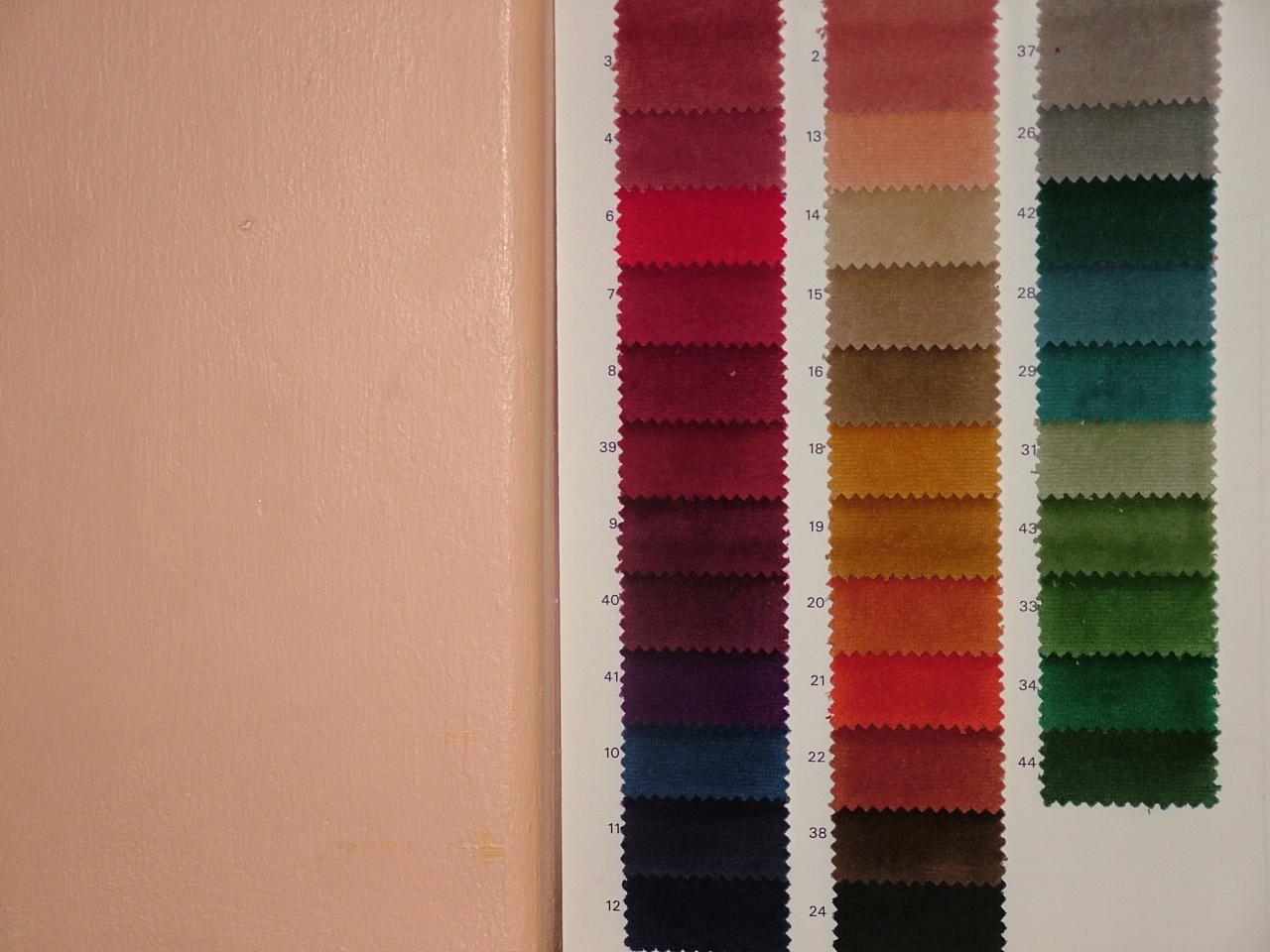
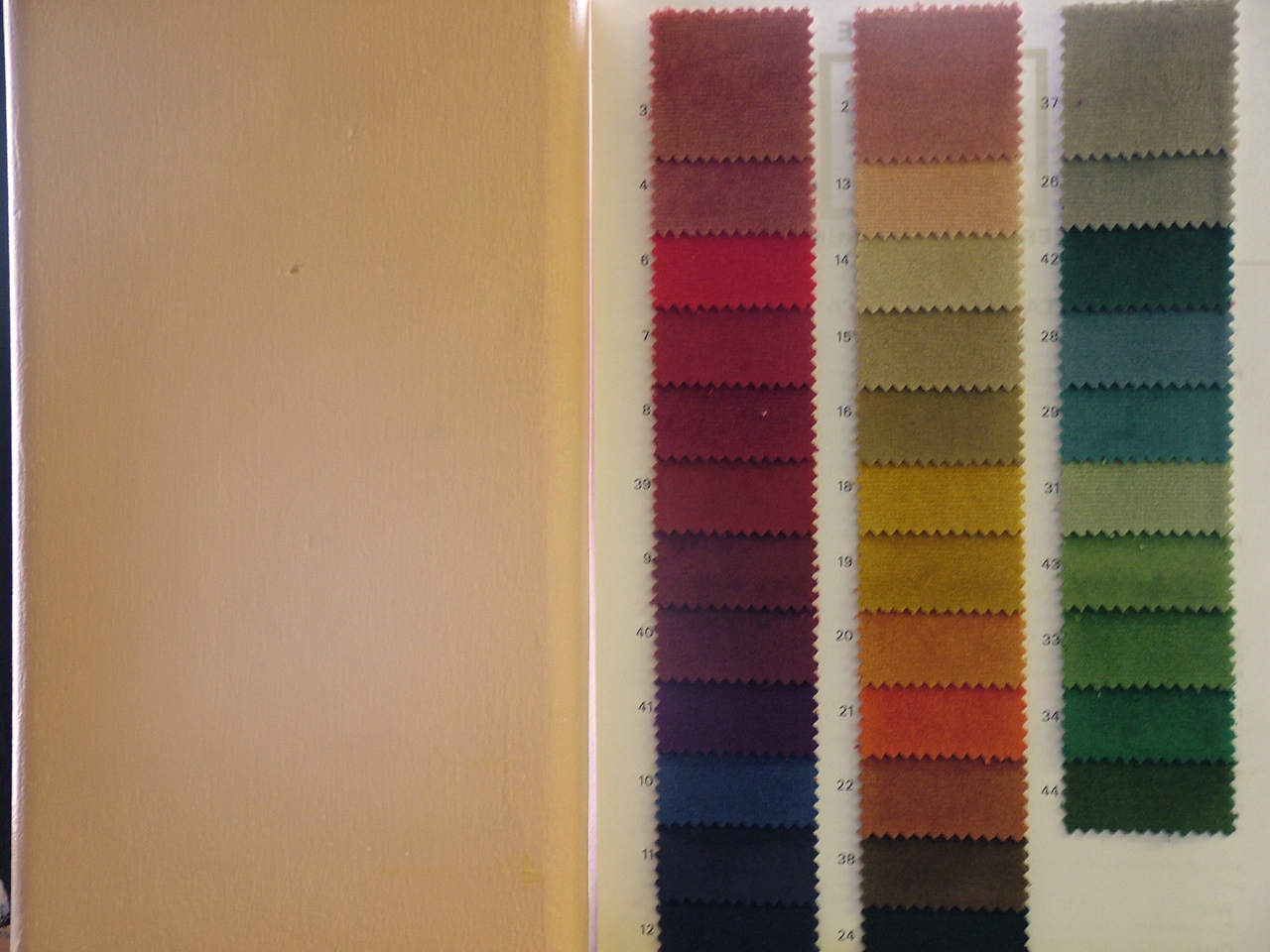
A mildly useful day. Started out by plotting the scene changes so that the rest of the crew know what is supposed to be going on and what moves where. Headed into college to pick up the sample swatch that J&C Joel had sent, also phoned them to arrange a fresh copy of the invoice. Got the correct drop instated on the main tabs and three tab bags orderd, one for each of the two FOH drapes, ane one for the cyc cloth. Total order cost £1166 ex. VAT which is £80 under the original budget. Photo's of the swatch card, along with a patch of peach wall are at:
The bad news for the day was that after cleaning up the the master runner from the tabs I was able to determine that Furse were the original, but a call to CCT who bought furse revealed that it's no longer possible to get the runners for the track. What's more none of the other manufacturers runners fit properly. Spent half an hour researching Nylon prices on the RS website. It should be possible to fabricate suitable replacements given that I do have an original master runner and that the master runner is just two normal runners linked together with some bits of tin plate.
Ongoing thoughts about backstage support structures, along with thoughts about the rigging of the corridor drape and it's mechanisms. According to my notes, and backed up by some photo's, there should be two holes in the roof angle iron between the brick arch and the fixed bar. Into one of these we'll secure the drop books that were made up for Grand Duke, which will support a 34' bar made up of two pieces of scaff. The stage right end of this will go right to the wall where the free end will be supported by a piece of vertical scaff. The vertical leg provides a mounting point for the tie off cleat which will attached to a piece of 18mm Ply which is in turn attached to the scaff by U-Blots.
The corridor drape is wound onto it's roller by unwinding cable from the opposite side of the roller. This mechanism also confers a 2:1 mechanical advantage. The winding cables are at either end and must be pulled at the same rate, therefore they have to be linked to a hauling line. The plan is to use bar divertors to divert the stage right lines along the bar to the stage left end, send it around another divertor back towards stage right. The two lines are now travelling in the same direction and can be linked to a clew plate or shackle that attaches to a hauling line. The hauling line runs off stage right probably via an intermediate single block to ensure that it doesn't sag, through a final divertor down to the securing cleat. To a certain extent because of the depth of the roller all of these running lines need to occur 4" upstage of the actual bar that the drape is hung from. I'm not sure whether this will be necessary, hence the tests that we are intend to run in the Union building.
Also worked out the various diversion mechanisms that the truck is going to need. The hauling lines from the truck will pass through a piece of 18mm ply that is bolted to the back of the decks using 48mm U-Bolts over the deck legs. The line will be diverted downwards using one of the standing sheaves from the Dramsoc tab mechanisms and then diverted across stage using specially purchased cheek blocks. The stage right line will be diverted across to stage left where it will look around a third cheek block which sends it back towards stage right alongside the stage left line. The two lines can be tied to a common point and that common point provided with mechanical advantage should it be deemed necessary. The stage left mechanism is shown here. It's worth noting that the inner rear wheels of the outer upstage truck sections will have to be removed since they will foul the truck hauling mechanism. Some 18" legs with lugs will need to be prepared otherwise the centre deck will be left with a floating upstage edge since for the U-Bolts to go around the deck leg it has to be unaccompanied. Another fixing option would be to drill the deck leg and bolt it, but drilling scaff is trickier than welding lugs to it.
The front drapes need a drop of 3.1m, need to ensure that this is prominent on the order since the quote is incorrect. Also need to change the snap hooks to ties since they allow a bit more leeway in height adjustment. The sample pack has arrived, but no sign of the quote so I'll chase that up tomorrow afternoon.
Started by thinking about support for the back wall, the concept has always been to have some form of goalpost structure that the 6' flats hook onto and just hang from. The hooks will be a reuse of the ones produced for the Grand Duke roof. A trilite goalpost would be preferable since it's construction inherently has a degree of stability, the problem is that trilite lengths are either 2m or 3m. Given that the dressing room truck is already about 7'6" tall this precludes the use of 2m legs because the back wall of the dressing rooms would foul the horizontal bar, however a 3m goalpost could be an awkward height for hooks flats onto. If we could somehow mount the goalpost on the floor rather than the rake then people standing on the rake would automatically be another 18" closer to the bar.
This led me on to thinking about how we could rearrange the decking such that the upstage corners no longer existed. An additional benefit conferred by the removal of the upstage corners is that access to the dressing rooms would be easier. By taking the upstage strip of decks, turning them through 90° and offsetting the very upstage set by half a deck free's up the corners and reduces the deck count by one. Two small in fills will need to be produced, but this shouldn't impact on the budget since most of the material already exists. The revised deck plan can be found here.
A rethink of the deck legs will be required since 14off 14.25" legs will be required. This may require breaking up a number of existing legs, or rethinking the deck rake such that it's an inch steeper. The legs from back to front would therefore be:
| A | B | C | D | E | F |
|---|---|---|---|---|---|
| 18" | 15" | 12" | none | 52" | 49.5" |
It should be possible to source all of the above legs from stock, although I have concerns about the number of 4' legs that we will need to find. A number of brackets may well have to be welded onto the 4' legs to allow them to support two decks.
With the decks rearranged it is possible to sit the trilite goalpost on the stage floor. Although we can no longer secure into the stage floor the post is sufficiently close to the deck legs that it can be braced to them. A total of 8 swivel aliscaff clamps will be required for connecting to the trilite, along with 8 standard swivels for connecting to the deck legs.
As a brief side note, I found another section of tab track with the header pulley attached and a second master runner. On the assumption that Flints can supply suitable runners it should be possible to use this salvaged track instead of purchasing new track. The advantage being that it can do a proper overlap.Final survey amount appears to be:
Whilst hunting around John Lewis, I found a light that should be suitable over the door for ActII - Scene I, albeit with a little modification to make it hang rather than mount upwards from it's wall bracket. All for £30 which is not strictly in the budget, but then none of the set dressing stuff was so it'll have to go into props. Should probably start making a list of big props that will be needed to dress the dressing rooms, and also some form of wall mount 1950's style telephone.
Given the deck leg survey done on Tuesday it's possible to work out what
will be the best angle for the rake given the available legs. The formula
for the deck legs is B = A/2 + 3, where B is the intermediate
leg length and A is the upstage leg length.
| A | B |
|---|---|
| 22.0" | 14.0" |
| 17.0" | 11.5" |
| 15.0" | 10.5" |
| 11.0" | 8.5" |
| A | B | C | D | E |
|---|---|---|---|---|
| 17.0" | 11.5" | none | 52" | 49.5" |
In order to set up in the concert hall where we don't have the lip of the stage to hang over we will need to use a different set of deck legs.
| A | B | C | D | E |
|---|---|---|---|---|
| 22.5" | 17" | 11.5" | 10,5" | 8" |
A survey of the new tab tracks:
Also surveyed the deck legs:
The following items all need some degree of construction before going down to Budleigh. They are listed roughly in order of priority.
A weekend will also be needed to rig and test the corridor rolling drape. That weekend can also be used to paint the sky drape since it will have to be a dust-free weekend if drapes are being used.
| Date | Day | Location | Plan |
|---|---|---|---|
| 11/06/05 | Saturday | CH | Brussels,Caisley |
| 12/06/05 | Sunday | CH | Brussels,Caisley |
| 18/06/05 | Saturday | CH | Construct Truck |
| 19/06/05 | Sunday | CH | Construct Truck |
| 25/06/05 | Saturday | CH | Corridor Test |
| 26/06/05 | Sunday | CH | Corridor Test, Airbrush Sky Cloth |
| 02/07/05 | Saturday | CH | Construct Front Flats Construct Lightboxes |
| 03/07/05 | Sunday | CH | Construct Front Flats Construct Lightboxes |
| 09/07/05 | Saturday | CH | Construct Padua Set |
| 10/07/05 | Sunday | CH | Construct Padua Set |
| 16/07/05 | Saturday | CH | Test Assembly |
| 17/07/05 | Sunday | CH | Test Assembly |
| 18/07/05 | Monday | CH | Run through |
| ext | Pickup bus | ||
| 19/07/05 | Tuesday | CH | Run through |
| 20/07/05 | Wednesday | CH | Dismantle Final prep. |
| 21/07/05 | Thursday | UDH | Loading |
From the scheduling this looks to be a fairly quiet build compared to AG. Given an approximate build crew size of 6 people, and 3weekends or 6days, we have a total of 24man days which equates exactly to the projected workload of 24man days. If more build crew are present then this should prove to be a fairly relaxed setup.
Need to plan the scaffold support structure that will be used and also the deck legs for the rake.
Met up with Rolly and Caisley to hand then the set designs and talk them through how it all fits together. They don't have any immediate problems with the set as it stands. Points to note were:
The kids have also rescued some tab track from the Rec Centre at Wilson House. Need to ascertain whether it's any use and what fittings will be needed to make it usable, rumours were that it doesn't contain any runners. I am still tempted to get the newer tab tracks because they'll be much smoother that the existing track.
Need to organise a trip to see Caisley somewhere mid-June, after I've seen some full act rehearsals where I've noted the general blocking and choreography. I'll drop Dale an email to enquire when he could do a full act rehearsal.
Overview drawings for each of the scenes show plan, front elevation and a coloured view from the approximate position of Granny 1:
Meeting with Tanya and Dale to talk through the set budget and the use of some of the capital to invest in tabs and metalwork. Budget was approved as presented, with the caveat that it can't exceed the stated value by any margin. Recovering material for the flats to be deferred until they are next needed.
The following now needs to be done:
Starting to work through the budgets trying to pull figures together.
| Item | Individual Cost | Quantity | Total | Supplier | Notes |
|---|---|---|---|---|---|
| Tab Tracks | |||||
| Unirail Track | 17.65/m | 10 | 176.50 | Flints | 4x2m, 2x1m |
| Joint Plate | 8.25/ea | 5 | 41.25 | Flints | Reduce to 4 if necessary |
| 2 Wheel Runner | 5.30/ea | 30 | 159.00 | Flints | 1 Runner every 300mm |
| Master Runner | 30.90/ea | 2 | 61.80 | Flints | |
| Overlap Arm | 7.15./ea | 1 | 7.15 | Flints | Might need 2 |
| Head Pulley | 24.40/ea | 1 | 24.40 | Flints | |
| Return Pulley | 22.60/ea | 1 | 22.60 | Flints | |
| Mounting Bracket | 5.80/ea | 7 | 40.60 | Flints | Reduce to 6 if necessary |
| Subtotal | 533.30 | ||||
| Drapes | |||||
| NDFR Velour Drapes | 750.00/pair | 1 | 700.00 | J&C Joel | 4.5mx4m lined, velour, chain, clips, Italian reefing, foh |
| Lightweight Canvas | 240.00/ea | 1 | 240.00 | J&C Joel | 10x4m ties, seamed, cyc. |
| Canvas | 250.00/ea | 1 | 250.00 | J&C Joel | 9x4m ties, seamed, corridor. |
| Subtotal | 1240.00 | ||||
| Metalwork | |||||
| 3" Loose Pin Butt Hinge | 0.67/ea | 20 | 13.40 | Flints | |
| 4" Plastic Pipe | 29.00/4m | 3 | 87.00 | Flints | Corridor Drape Roller |
| Joins | 15.00/ea | 2 | 30.00 | Flints | Corridor Drape Roller |
| Single Swivel Block | 4.54/ea | 6 | 27.24 | Flints | Corridor & FOH reefing |
| Cheek Block | 5.46/ea | 3 | 16.38 | Flints | Corridor & FOH reefing |
| Double Swivel Block | 6.69/ea | 2 | 13.38 | Flints | Corridor & FOH reefing |
| Heavy Scenic Flax | 10.08/m | 8 | 80.64 | Flints | Recovering 2off 6' flat, omit if necessary |
| No.8x1" | 2.92/1000 | 1 | 2.92 | Screwfix | |
| No.8x1¼" | 3.41/1000 | 1 | 3.41 | Screwfix | |
| No.8x1½" | 3.95/1000 | 1 | 3.95 | Screwfix | |
| No.8x2" | 5.43/1000 | 1 | 5.43 | Screwfix | |
| No.8x2½" | 8.46/1000 | 1 | 8.46 | Screwfix | |
| No.8x3" | 5.91/500 | 1 | 5.91 | Screwfix | |
| 1m M10 Studding | 5.98/10 | 1 | 5.98 | Screwfix | Light box support |
| 350x300 Shelving Bracket | 13.99/20 | 1 | 13.99 | Screwfix | Flats on truck |
| Subtotal | 341.03 | ||||
| Paint | |||||
| Matt Emulsion White | 3.73/5l | 4 | 14.92 | B&Q | |
| Matt Emulsion Magnolia | 3.73/5l | 2 | 7.46 | B&Q | |
| Brick Red | 28.19/5l | 1 | 28.19 | Bromel Vinyl Emulsion | |
| Nicotine Yellow | 20.17/5l | 1 | 20.17 | Bromel Vinyl Emulsion | |
| Dark Wood | 14.04/2.5l | 1 | 14.04 | Bromel Vinyl Emulsion | |
| Terracotta | 11.36/2.5l | 1 | 11.36 | Bromel Vinyl Emulsion | |
| Gloss Olive Drab | 10.00/2l | 1 | 10.00 | ||
| Bolloms Black Emulsion | 12.00/5l | 3 | 36.00 | Flints | |
| Gordon's Sky Blue Dye | 16.80/250g | 1 | 16.80 | Flints | Airbrush onto cyc |
| Indigo Blue | 16.80/250g | 1 | 16.80 | Flints | Airbrush onto cyc |
| Titebond Adhesive | 16.79/3.8l | 2 | 33.58 | Axminster | |
| Subtotal | 209.32 | ||||
| Greens | |||||
| 75cm Ivy Trailer | 4.80/ea | 10 | 48.00 | Replica Plants | |
| 1.5m Cedar | 40.00/ea | 4 | 160.00 | Replica Plants | Omit if necessary |
| 1m Zig Zag Maple | 39.50/ea | 2 | 79.00 | Replica Plants | Omit if necessary |
| Delivery | 12.00 | 1 | 12.00 | Replica Plants | Free after £300 |
| Subtotal | 299.00 | ||||
| Wood | |||||
| 2440x1220x18mm Chipboard | 10.52/ea | 8 | 84.16 | Fulham Timber | 6/trucks 2/infills |
| 2440x1220x3.2mm Hardboard | 3.71/ea | 27 | 100.17 | Fulham Timber | 8/trucks 4/foh 4/house 8/arcade 3/wall |
| 50x50mm Prepared Softwood | 0.89/m | 54 | 78.92 | Fulham Timber | 54/trucks |
| 25x50mm Prepared Softwood | 0.58/m | 152 | 79.04 | Fulham Timber | 30/trucks 22/foh 28/house 72/arcade |
| 12x75mm Prepared Softwood | 1.09/m | 10 | 10.90 | Fulham Timber | 10/foh |
| Delivery | 20.00 | 1 | 20.00 | Fulham Timber | estimate |
| Subtotal | 373.19 | ||||
| On-site Contingency200.00 | |||||
| Total | 3195.84 | ||||
Notes:
Whilst looking up roofing stuff I noticed that Screwfix do both Acrylic and Polycarbonate. Costs for 610x1220 sheets are:
| Material | 2mm | 4mm | 6mm |
|---|---|---|---|
| 6x Acrylic | 41.69 | 83.40 | 126.81 |
| 2x Polycarbonate | N/A | 46.80 | 70.63 |
Talked through the set as it's currently designed. Initial concerns about there not being enough space in front of the Corridor drape were allayed when we talked through each of the scenes and transitions in order. The latest details of what they want each scene to look like are:
| Scene | Setting | Notes |
|---|---|---|
| 1 | Bare Stage | |
| 2 | Corridor | |
| 3 | Dressing Rooms | |
| 4 | Shrew Curtain | Very quick change into 5. |
| 5 | Street Scene | |
| 6 | Backstage Curtain | |
| 7 | Corridor | previously dressing rooms |
| 8 | Street Scene | |
| 9 | Street Scene | continuation of above |
| 1 | Theatre Alley | |
| 2 | Shrew Curtain | Scene will be padded |
| 3 | Street Scene | |
| 4 | Corridor | |
| 5 | Dressing Rooms | |
| 6 | Corridor | |
| 7 | Backstage Curtain | |
| 8 | Baptista's Garden |
Talked through budgets. I'd managed to get hold of some rough quotes from J&C Joel for the drapes.
| Item | Cost | Notes |
|---|---|---|
| Tab Tracks | 600.00 | cap.ex. |
| FOH Tabs | 680.00 | cap.ex. |
| Cyc Cloth | 240.00 | |
| Corridor | 250.00 | |
| Paint | 300.00 | estimate |
| Wood | 400.00 | estimate |
| Metalwork | 200.00 | estimate |
| Contingency | 200.00 | |
| Foliage | 300.00 |
A decision was made to go with the rake since it won't cost us anything extra, except perhaps a couple of cutting discs. All of the scaff needed can either be sourced from existing fixed length legs or cut to length from scrap pieces within the traps.
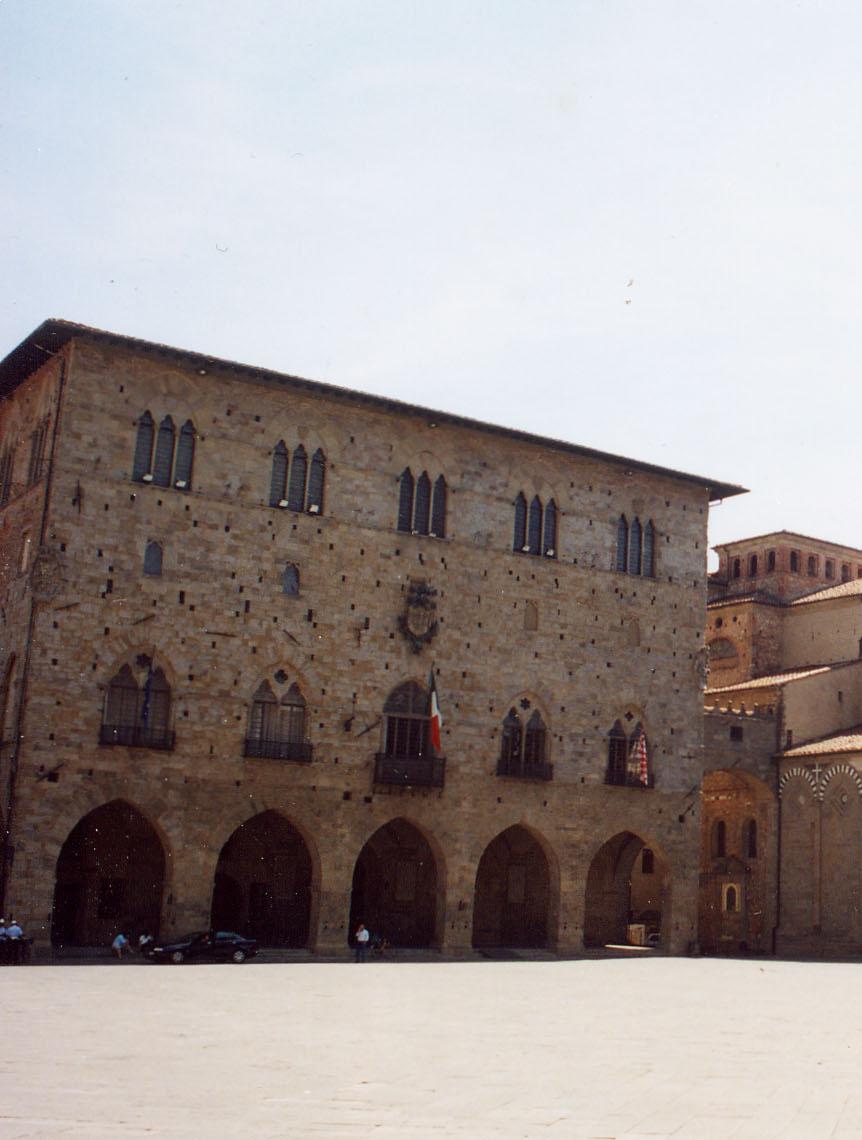
Finally put pen to paper with regards to the Act I Italian scenes. The script calls for a house USL, and another building DSL. From my reference books on Italian architecture I'm rather taken with the Palazza Comunale on the Piazza del Duomo in Pistoia, an image I culled from the web is here. Arcades are very much a part of Italian architecture of that area, although I'm also very much in mind that I used an arcade, albeit in a half timbered guise, for Grand Duke only 2 years ago. The black and white edging on the adjacent building is also quite nice and might make it into the paint scheme.
The other house is intentionally simpler, again I'm very mindful of the fact that it's not too dissimilar to one of the houses from Forum that was taken down to Budleigh 18 months ago. The third piece of the set is a low curved wall. The intention is to reuse these in the Act II Italian set to flank a raised Archway CS. Plan view here, and a view from the approximate position of Granny 1 to check sight lines is here.
From an assembly point of view, the supports for the smaller house would be hinged onto the front segment. The roof would then drop on top, probably onto hooks rather than splinges since they are easier to handle. If it requires a proper door then additional bracing will undoubtedly be needed on the upstage edge of the flat. Downstage edge either splinged or laced to the fixed wing flat.
The more I look at this the more I keep thinking that I need to move the cyc cloth back to the rear wall, however when you look at it there is still 28'x12' of usable stage space, which isn't too bad. Worked out the available floorspace for each scene, detailed in the table below.
Entrance 1 is the most downstage entrance located in front of the arch.
Entrance 2 is the CS entrance.
Entrance 3 is the US entrance.
The apron doors are set into the FOH flats.
| Scene | Stage Dimensions | Access |
|---|---|---|
| 1 - Bare stage | 28'x18' | 1,2 & 3 both sides. |
| 2 - Corridor | 28'x9' | 1 both sides. |
| 3 - Dressing rooms | 10'x6' per room, 40'x4' on apron | |
| 4 - Shrew curtain | 40'x4' apron | apron doors only |
| 5 - Street scene | 28'x12' | SL 1+2(arcade),SR 1+2(house) |
| 6 - Stage curtain | 40'x4' apron | apron doors only |
| 7 - Dressing rooms | 10'x6' per room, 40'x4' on apron | |
| 8 - Shrew curtain | 40'x4' apron | apron doors only |
| 9 - Street scene | 28'x12' | SL 1+2(arcade),SR 1+2(house) |
| 1 - Alley | 28'x18' | 1,2 & 3 both sides. |
| 2 - Shrew curtain | 40'x4' apron | apron doors only |
| 3 - Street scene | 28'x12' | SL 1+2(arcade),SR 1+2(house) |
| 4 - Corridor | 28'x9' | 1 both sides. |
| 5 - Dressing rooms | 10'x6' per room, 40'x4' on apron | |
| 6 - Corridor | 28'x9' | 1 both sides. |
| 7 - Stage curtain | 40'x4' apron | apron doors only |
| 8 - Garden | 28'x12' | 1,2 & 3 both sides. |
Was laying in bed thinking about how to move the truck when it occurred to me that I hadn't yet considered raking the stage. Given that we now seem to have settled on a decking sub stage it might be worth considering. For AG a rake was out of the question because the revolves wouldn't have worked particularly well on a rake because the walls on the revolve have to be perpendicular to the rake otherwise once they've been spun they all line up again.
The reason for considering the rake is that the audience can't actually see the back of the stage because the stage is actually above the eye line of the audience. Audience is around 46", and the actual stage in Budleigh is set up for exactly that height 1193mm (46.91"). Adding another 7" worth of deck means that almost everyone has their eye level below the level of the stage. To get the stage back onto the audiences eye line would require a rake of 9" over 20'. It also has the advantage of dropping the front edge of the stage making it slightly less imposing.
The implications of a rake are:
The actual slope of any rake would be determined by the length of the existing Budleigh stage legs and what suitable legs Dramsoc already has in stock. The principal measurements are shown on this diagram.
Sat down and worked out the masking for the wing flats. Current plan is three full height 4' wing flats per side angled slightly with the upstage flats slightly further onstage than the downstage flats. The upstage flats connect with the back wall. Sight lines we calculated using a baseline of 3'6" which means that there should be ample overlap when using the 4' flats, also gives some play should the back wall flats not fill the full width as expected. Granny 1 is taken as being 14' from the front of the actual Budleigh stage, and 4' from the side wall of the hall.
Downstage masking is more of an issue, resulting in some tight corners that the cast will need to negotiate. Also had to make sure that the downstage masking didn't foul the doorways in the Budleigh front flats. Modelled the Budleigh Front flats out to 6'. Also decided to use flats to box in the drapes since this improves the masking considerably. It is also unclear how the doormans booth is going to get onstage, or indeed what it will look like. The best idea I've had so far is to make it a simple flat, possibly with the phone hinged onto the back in a fairly sensible manner so that it looks a bit like a phone booth. The flat then slides out from behind the flat boxing the back of the curtains in.
Modelled the rolled canvas corridor drape for the sake of completeness, although I've had no response from Dale since my reply listing the reasons why it should be kept. Also added the cyc backcloth, because it has to pass through one of the wing portals it is another 12 to 15 inches downstage of the back wall. Will have to try and design the various Italian set pieces to detemine whether this is reducing the stage too much, if it is one of the back wing flats will have to be hinged.
Ammended drawing located here, doesn't show the boxing around the back of the downstage tabs but all of the other permanent set is now positioned. Need to work out a simple list of stage dimensions for each scene that can be given to Dale so that the floor can be marked for rehersal purposes.
A quick bit of web research into artificial plants since a desire has been expressed to get some greenery into the Italian scenes. Pleasantly surprised, trees seem to be much cheaper than when I last looked for Forum two years ago. The two main sites of interest are:
Prices are comparable once VAT is taken into account, prices on the first site include VAT, prices on the second are exclusive of VAT.It looks like 4'-5' fig trees can be picked up for around £50, a 5' cedar for £40 and shrubs for around £30. Ivy for dressing up the flats is £4.80 for 2.7m, or £4.00 for bunched 75cm trailing. Depending upon how the rest of the budget pans out it might be possible to allocate around £300 for dressing up the Italian scenes. Prices on the second site seem slightly more reasonable, but need to check out the VAT situation, one sit is inclusive, one site exclusive.
I need to sit down and design the two Italian sets, but I think some Ivy, some cedar's and shrubs and two focal point items, such as zigzag camelia, for the Act II set would fit the bill quite nicely. Have to remember that none of these include pots, so we would have to purchase these separately as well as suitable bedding materials.
More correspondence with Andy Caisley regarding the setting of footlights into the stage just in front of the main tabs. Having thought about this a little more we could either push the upstage decks further upstage, or move the apron decks downstage a short way. The advantage of the latter is that it allows the footlights to be deeper since they will be sitting off of the actual Budleigh stage, the disadvantage is that it will require building fills to fill in the area where the fronts flats are going to go. Since we're already building fill in terms of light boxes,
Keeping the costs down is the primary concern. Obviously the Perspex will have to be bought, but the rest of the materials we should be able to source from existing stock, with the possible exception of the light sources themselves. The original dimensions that were being talked about was a light box in the region of 4'wide, 6"deep and 7" high. We've possibly got enough BC fittings to flesh out a reasonable length of light box, my recollection is that we should have about 32 fittings although undoubtedly some have strayed since they were purchased for AWE many years ago. Florescent tubes would be another option. If we relax our initial dimensions then it would be possible to create a light box 12" deep, and as long as we move the apron forwards, fit Coda battens beneath it. The code battens can be mounted away from the Perspex to reduce heat issues and a heat reflector could be used to reflect the heat back down if necessary. The advantage is that the beam pattern on coda's is much better than bare BC fittings or florescent tubes, disadvantage is that larger pieces of Perspex will be needed.
Threw together a quick prototype of a light box so that I'm happy with what needs to be done, and that it's structurally sound. For the moment it is designed with 4 BC fittings at 12inch intervals, although this may change.
I've been thinking about colour schemes over the course of the week. Ideally I'd like the Italian scenes to be warm with the backstage scenes much cooler. However, the last few sets that I've done have all incorporated spearmint green, so unless I'm trying to develop another personal hallmark I'm keen to avoid using that as the cool colour. Any form of blue is going to be out of place in the backstage areas, and will clash with the blue used for the sky backcloth in the Italian scenes. Which brings me to nicotine yellow...
Nicotine yellow isn't exactly a cool colour, but one of the other ideas that has been rolling around my mind is almost sepia toned backstage areas. Muted yellows, browns for the backstage areas along with a fair smattering of brick red would be predominant. Colour table is by way of example since monitors will render colours differently.
| Colour | Usage |
|---|---|
| Brick Red: Back wall of the theatre that also acts as the exterior wall in 'Too Darn Hot' | |
| Nicotine Yellow: Corridor wall and interior of dressing rooms. Distressed, washed over with dirty brown and blended into a darker shade in the corners. | |
| Dark Wood: Dark brown wood used for doors, dado rails, panelling in the backstage area. | |
| Olive Drab: Stage door and the stage door mans booth. Possibly the interior door in the dressing room. |
If the backstage areas are subdued, what to do with the Italian sequences? I'm keen to have a fairly vivid blue backdrop, since this will contrast with the dull brick red back wall that forms the majority of the backstage areas. On top of that I would quite like the Italian structures to be fairly white, ie. a just off white ragged over an biscuit or oatmeal base and veins of grey. Introduction of green through ivy and other plants, although sourcing effective greenery at a sensible price could be tricky.
| Colour | Usage |
|---|---|
| Biscuit: Base layer for the buildings and structures. | |
| Off White: Ragged on topcoat for the building and structures | |
| Grey: Veins and streaks within the buildings and structures, almost marbling | |
| Brick Red: Veins and streaks within the buildings and structures, alternate colour for the marbling. | |
| Blue: Sky backcloth | |
| Green: Greenery | |
| Terracotta: Roof tiles |
The theory is that the white and blue of the Italian scenes should stand out well against the reds and yellows of the backstage scenes. My main concern is getting this applied to the costumes, so that the backstage outfits are somewhat drab and dreary and the onstage outfits as gaudy as possible.
Received correspondence from both Dale and Andy Caisley over the course of the week.
From Dale:
From Rolly:
Started fleshing out the logistics of where everything is going to fit. This is made somewhat easier thanks to having a library of parts ready to go in the CAD package. The initial drawing can be found here. It shows the main features:
More thoughts on the truck, have decided that 6off 7'x3' trucks will be more manageable, and buildable than 4off 10'x3' trucks. After some initial thoughts about how to attach the front trucks to the rear trucks it occurred to me whilst I was pondering whether they could be splinged that I might as well just hinge then and fold them up onto the back trucks ready for the next deployment.
If the door is positioned such that it's hinged edge is upstage of the hinge for the front trucks then it can be opened so that it doesn't foul the front trucks. If the front supporting edge of the truck is slightly offset from the wall that supports the upstage edge of the door then it should overlap as it folds up. This is illustrated in the accompanying movie (1mb). It probably make most sense to have the three segments fold individually, I was also anticipating using the two outer segments in the final scene to create a raised platform therefore they need to be splinges rather than true hinges. They will need to be reattached as part of the reset so the fiddliness of splinges isn't a concern.
From a aesthetic design point of view, I like the cutaway because it allows action in the other dressing room to be seen from across stage, although because of the angles and the fact that we will be moving the dressing rooms downstage this isn't as much of an issue as I was at first fretting over. It also poses the question as to whether the door could also be cut off, or whether it should be a full height door sitting in a cutoff wall.
If the two sections are to be used for a raised platform in the final scene then the underside of the trucks needs to contain some form of locating pins that sit in holes or recesses within the crates that will be used to support the .
For attaching the rear wall I am tempted to resurrect the hooks used on the roof segments in the second act of Grand Duke. These could hook over a piece of Bilite running the width of the stage. Another piece of bilite at around 8' above stage can act as an intermediary support, with diagonal bracing as necessary to support the middle. Flats should actually stand just under an inch above the stage level so that they can be lifted off quickly.
I am still trying to ascertain whether I can source vac-formed bricks, or some vac-forming equipment to actually form said bricks. I would like the back wall to be as realistic as possible and vac-formed bricks would be an ideal way of giving this some real texture.
The good news is that the build period should be significantly less than AG or Grand Duke because the few pieces that need to be built are the truck sections, the 'new' Budleigh Flats and some bits for the Italian scenes. The bad news is that the amount of infrastructure in terms of tab tracks etc. is going to make it a tough assembly and the amount of artistic painted cloth could prove problematic.
Stopped by college to help Duncan clean up the chairstore prior to the February show. Notes from hunting around the chairstore:
For the February show enough fittings were located to assemble a set of scissor drapes. From my Sorcerer notes, the wood supporting the FOH tabs is 3400mm from the stage, the front of the fascia is 3137mm from the stage, The height of the fascia is given as 260mm. Depth of tab tracks is 120mm from the wood support and they extend 350mm beyond the edge where the fascia drops down. I've also got a note that our lengths of tab track are 3840mm long, ie. 12'7", putting two of these together wouldn't get us the full 8240mm needed for the width of the stage, plus overlap.
A reply back from Dale:
Lots of point to ponder on there. The first job was to go through the various scenes listing what the script says about them, whether they are a full stage number, whether Dale is expecting them to be a chorus number and whether they are set in the theatre or onstage. All carefully jotted down in the notebook, one scene per page ready to accept additional comments from people at discussions.
This tells me is where there are conflicts of interest with Dale's intended direction such full chorus dances in front of a half-tab. It also tells me which scenes are used a lot and hence warrant special attention to ensure that they can be set up quickly, principally this is the dressing rooms.
| Scene | Description | Extent | Style | Notes | |
|---|---|---|---|---|---|
| Act I | |||||
| 1 | Bare stage of the Ford's Theatre Rear brick wall Numbered flats leaning on wall |
Full Stage Chorus Number |
Theatre Styling | General theatre mess around the walls Uncluttered centre |
|
| 2 | Corridor Spiral staircase (R) Door mans Booth (L) |
Half Tab | Theatre Stlying | Ditch staircase Door mans Booth required |
|
| 3 | Dressing Rooms Fred's (R) Lillie's (L) connecting door |
Full Stage | Theatre Styling | Directions indicate unit moves downstage | |
| 4 | Front Of Curtain | Half Tab Chorus Number |
Shrew Styling | ||
| 5 | Padua Street Scene Entrance (UL) Balcony (over door) Arch + Platform (C) Small Stage (RC) Entrance to Inn (R) |
Full Stage Chorus Number |
Shrew Styling | House has to be there Balcony not essential Inn is a 2nd building DSR Podiums unnecessary Feel of a village behind |
|
| 6 | Backstage | Half Tab | Theatre Styling | Grey tabs | |
| 7 | Dressing Rooms As before |
Full Stage | Theatre Styling | ||
| 8 | Front of Curtain As previous |
Half Tab | Shrew Styling | ||
| 9 | Exterior Church 7 Arches, chorus climb arches |
Full Stage Chorus Number | Shrew Styling | Use village from Scene 5 | |
| Act II | |||||
| 1 | Theatre Alley Door Marked (Stage Door) Illuminated Windows Packing Cases |
Full Stage Chorus Number |
Theatre Styling | Windows not essential Streetlamp to indicate outside? Lamp over stage door Practical (danceable) crates Some form of height in the set | |
| 2 | Front Of Curtain As Previous |
Half Tab | Shrew Styling | Scene will possibly be extended to allow set change to occur Stage directions refer to traveller, eg. pit lift. | |
| 3 | Pertruchio's House Door (UL) Table (RC) |
Full Stage | Shrew Styling | Use village from Act 1, Scene 5 | |
| 4 | Corridor As Previous |
Half Tab Dance Number |
Theatre Styling | ||
| 5 | Dressing Rooms As Previous |
Full Stage | Theatre Styling | ||
| 6 | Corridor As Previous |
Half Tab Dance Number |
Theatre Styling | There may be changes to allow the dance to occur on the backstage set. | |
| 7 | Asbestos Curtain | Half Tab | ? | Front Of Curtain Use Shrew Styling |
|
| 8 | Baptista's House Arch (C) |
Full Stage Chorus Number |
Shrew Styling | Either chapel, large hall or outside Podium or height towards back Keep front clear | |
From producing the staging run-through a number of thoughts and questions are starting to form in my mind:
With this much drapery my immediate concern is that there simply isn't enough tab-tracks to run everything. The corridor cloth will need some form of roller mechanism similar to that used on cinema screens, the other two drapes need proper scissor mechanisms to bring them onstage. This will require something in the region of £600 for a 9m length of tab track with all of the relevant fittings before we've even started purchasing the drapes to hang on it. If we need to buy two tab tracks then that obviously doubles.
Rigging space also becomes an issue, the scissor drapes are easier since they only require a couple of inches of stage depth, but if they are downstage of the arch then there will be masking issues since we can't get the far enough into the wings to tie them back because of the curve of the roof. Could reduce the stage width a bit by adding some small flats, but such and approach gets messy from the perspective of keeping a nicely framed proscenium arch.
The rolling corridor cloth will have to go behind the arch, need to be wary of all the bits of woodwork and metalwork that stick out from the wall back there. On-stage proper the ceiling goes the full width of the stage and slopes down towards the back, this means that tabs can go right out into the wings and be tied back out of the way.
If we do decide that one of the two scissor drapes needs to go right the way downstage then we'll have to butch or re-build the two FOH flats and set doorways in them so that the cast can get onto the apron. Doorways should open upstage with their hinged edge offstage to provide the best possible masking. The more I think about this, the more I'm realising that re-using the Budleigh Tab tracks and setting up a second tab track a little bit behind that is going to be the best option. The closer that the tabs can be to the front flats, the better and easier the masking. Since we will have to make up front flats that contain a door we can make them just a little bit wider in order to provide better masking. All operation from the DSL corner since the handle is already there, doormans booth will have to be stored DSR and wheeled on for the corridor scenes.
An additional cloth lightweight cyc will be needed across the back to mask the back wall. Has to be lightweight so that it can be run across quickly, probably on a tensioned steel wire rope.
Moving on to the dressing rooms, the more I think about these, the more I realise that they have to be on some form of truck because they are too complex to set up within the time periods allowed due to the large amount of furniture specified. They also need to be brought forwards, right down through the proscenium arch otherwise they will be lost at the back of the stage. For comparison with AG the revolves actually put the centres of the two staterooms on the same axis as the arch.
Initial thoughts about trucks for the dressing rooms revolved around the use of 4off 6'x5' trucks. These could be arranged in a 4x1 fashion to produce a truck 6' deep by 20' wide. The original thought was to store them behind a false back wall that hinges outwards to allow access. The problem with this is that once the doors are hinged out you can't shut them up again until the truck is downstage. Also an issue was the fact that a false wall 5' from the back of the stage and a 6' truck just won't fit into the space between upstage of the arch.
Therefore we need to reduce the depth of the false wall, ie. the trucks have to be skinnier. This led me to look at trucks 10' wide by 3' deep. It then occured to me that when arranged in a 2x2 fashion it would only be the back two trucks that actually contained any structure, ie. the back wall of the two dressing rooms. If the front two trucks were sufficiently lightweight then they could be stood vertically somewhere in the wings. If, instead of hinging the back wall it somehow clipped into place at the top and could be pulled forwards and slid to on side then we could conceivably use on giant truck 20' wide and 3' deep (although it might be cosntructed in smaller segments for practical purposes). In an ideal world we would use large roadbox sized wheels for smoothness which can be straight wheels because the main section of the truck only ever moves up and down stage, and the smaller sections are carried on and off. I also have it in my mind to use the 10'x3' segments as rostra for the raised sections required in the Act II finale, possibly by sitting them on the crates from Too Darn Hot so that the wheels are no longer in contact with the floor.
For the backstage segments, use flats (probably from the Shrew scenes) to mask the doorway and dressing room window which will be exposed in for the start of Act II. The other option would be to make up different varieties of flats that slot into the holding mechanism mentioned above.
Still unsure about the actual Shrew scenes, have a book on the art and architecture of Tuscany on order to try and find some photo's that I can point at. In general the plan was to build a number of pieces that could be assembled like a jigsaw in differing manners depending upon what scene was required, this is now less of a problem given that 3 of the 4 scenes are to be stages on the village set, but we'll probably try and use bits of the village set in the final scene.
Given the amount of infrastructure in terms of tabs and tab-tracks it's not unfeasibly that the set could require in excess of £3000. Dale didn't seem to think that the figure was unreasonable given the context of this sort of investment being useful for many shows over the next few years. He would have to discuss such large cap-ex type purchases with the committee however.
Emailed Dale to find out what his thoughts were on the style of the show and the sort of stageing that he already had in his mind.
The more that I think about this set, the greater my reservations are. There is the obvious technical aspect of designing a set to fit the Budleigh stage that works both practically and aesthetically, which I am beginning to doubt can be done within the remit of the usual set budget for tour, but also the amount of time that it will take me to achieve this from a design perspective. Anything Goes took maybe two hundred hours of my time to design, and another hundred plus hours supervising construction at weekends over the two months in the run up to it, personally I'd quite like a holiday one of these years! For the moment however, things will have to carry on as usual until I find out what resources I've got to play with, both monetary and personnel.
Various parts of the jigsaw are slowly starting to form up in my mind. The two principal technical problems that need to be resolved are:
Because the back wall of the stage in Budleigh has a double door set into it and various bits of woodwork bolted to it to secure ladders, it is usual to erect a false back wall using either a cyc cloth or a number of flats. I'm currently veering towards using flats for the back wall since they can be arranged such that they fold open to form segments of set, principally I'm thinking of the dressing room sequences. If the false back wall is deep enough it might also be possible to store some of the furniture in the gap. The one thing that I don't like about this is that the dressing rooms have this central wall which for most of the audience will mask their view of the other dressing room, it also make you feel like you're looking in from outside because you can't see both of the side walls. It might be possible to screw with the perspective a little to improve this, but the connecting door will always be masking. It we have to stick with a true perpendicular wall then consider a cutaway wall.
Any interconnecting door would have to be assembled separately to the folding walls. It will also need bolting securely to the stage which means a sub-floor of some form will need to be laid down, either Steeldecks or sheets of ply on wooden bearers. The ply is additional cost but needs to be considered in the context of having to get a bigger truck to shift more decks down to Devon. Could see if anyone is able to hire steeldeck locally, but then we wouldn't be able to drill into them to secure scenery which defeats the object of them in the first place.
If the back wall is painted to resemble a brick wall, or if resources are available within college then proper vacuum formed bricks, then it needs to be masked for the various Italian sequences by a sky drape. Ideally the thinner material the better, firstly because it takes up less space in the wings, secondly it can be suspended from a taught steel wire rope strung between eye's set into the wall. Need to source some sensibly sized chem-bolts, probably from Mylan. Painting onto such thin material poses it's own problems, standard emulsion will be too heavy and will crack as the material is gathered out of the way in the wings. Ideally some sort of airbrush technique would be used, although this requires sourcing air-brushing equipment and spare material to practice on since nobody has much experience at air-brushing. Does it make more sense to build up white clouds onto a blue drape, or build up blue sky onto a white drape. Large format printing could be another option, but probably prohibitively expensive for our budget.
The Taming of the Shrew segments are all introduced from the front of a tab that is referred to in the script as the Shrew Front Cloth, presumably because the original production has something painted on it. Since we can't justify the cost of a single use fully painted tab, one proposal is to get a decent set of Front Of House tabs for Budleigh. A deep red, or possibly even a bottle green would sit best with the current Apricot colour scheme in the hall. I've asked J&C Joel for a quote on a pair for FOH tabs to fit Budleigh with 50% fullness, webbing and ties across the top to allow attachment to the existing tab tracks, and fittings for an Italian reefed opening approximately 5m wide. We would also need to source return pulleys for the reefing lines, 8mm side mount blocks are available from Flints for £5.46 ex. VAT.
Which brings us to tab tracks. The existing Dramsoc Tab tracks have survived beyond their useful life span and just aren't suited to what we are doing in various shows these days. Referring to Triple E Unirail system, to get a 6m section with all the runners, joint plates, pulleys, etc... would cost around £520. Thinking about it a little more, I'm not certain that our existing stock of tab track parts would be able to do an overlapped FOH opening tabs over the width of the Budleigh stage. Probably can't justify another £520 on to of the several hundred that a fresh set of tabs will cost, so we will have to do something inventive with the old tab tracks.
Remaining questions are how to handle the Corridor which is another DS tab to mask the scene changes going on behind, and what to actually do for the Taming Of The Shrew sequences.
First chance look at the script to see what I can make of it. I've deliberately been avoiding seeing any other productions in order to give myself a blank sheet without any pre-conceptions.
First job, compilation of a scene breakdown.
| Act I | |
|---|---|
| Scene 1 | Bare stage of the Ford's Theatre |
| Scene 2 | Corridor. Spiral staircase (R), Doormans Booth (L) |
| Scene 3 | Dressing Rooms.Fred's (R), Lilli's (L), connecting door |
| Scene 4 | In front Of Shrew Front Curtain |
| Scene 5 | Padua Street Scene, Entrance (UL), Balcony (over door), Arch + Platform (C), Small Stage (RC), Entrance (R) |
| Scene 6 | Backstage |
| Scene 7 | Dressing Rooms. As before |
| Scene 8 | Front of Curtain |
| Scene 9 | Exterior Church, 7 Arches (chorus perch on arches) |
| Act II | |
| Scene 1 | Theatre Alley. Door Marked (Stage Door), Illuminated Windows |
| Scene 2 | Before The Curtain |
| Scene 3 | Main Room, Pertruchio's House. Door (UL), Table (RC) |
| Scene 4 | Corridor |
| Scene 5 | Dressing Rooms |
| Scene 6 | Corridor |
| Scene 7 | Backstage Curtain |
| Scene 8 | Baptista's House. Arch (C) |
The script is fairly obviously written so that scenes can be set up behind various mid-stage drapes, ie. the Shrew Front Curtains, the Backstage Curtain and the Corridor Scene. Easy enough with a fly tower, very tricky without.
First thoughts are: