
The design brief is to create a living space for 8 people, with integral kitchen and bathroom. Modification of the bus structure is to be kept to an absolute minimum. Principally this is because it is a monocoque structure where large portions of the shell are stress bearing and cutting into them could damage the integrity of the structure, but also being able to return it to the bus format fairly easily will improve it's resale value if or when I decide to sell it.
Most of the concepts are discussed in terms of window bays. This is because it is neatest if any vertical structures line up with the existing pillars, at the detailed design stage this will be even more important since the window pillar provide one of the few attachment points to secure the interior fittings to the shell. The RML variant of the Routemaster is comprised, from front to back, of three full width window bays, followed by a half width window bay, then another three full width window bays.
By way of comparison, an 8 person narrow boat is typically around 70' in length, of which around 60' is living space, the rest being bow and stern platforms. Excluding the platform and drivers compartment, the bus has approximately 52' of livable space, 30' on the upper deck and 22' on the lower deck.
The concept for the upper deck is that it is to be the main sleeping and entertainment space with space provided for 6 people to sleep comfortably.
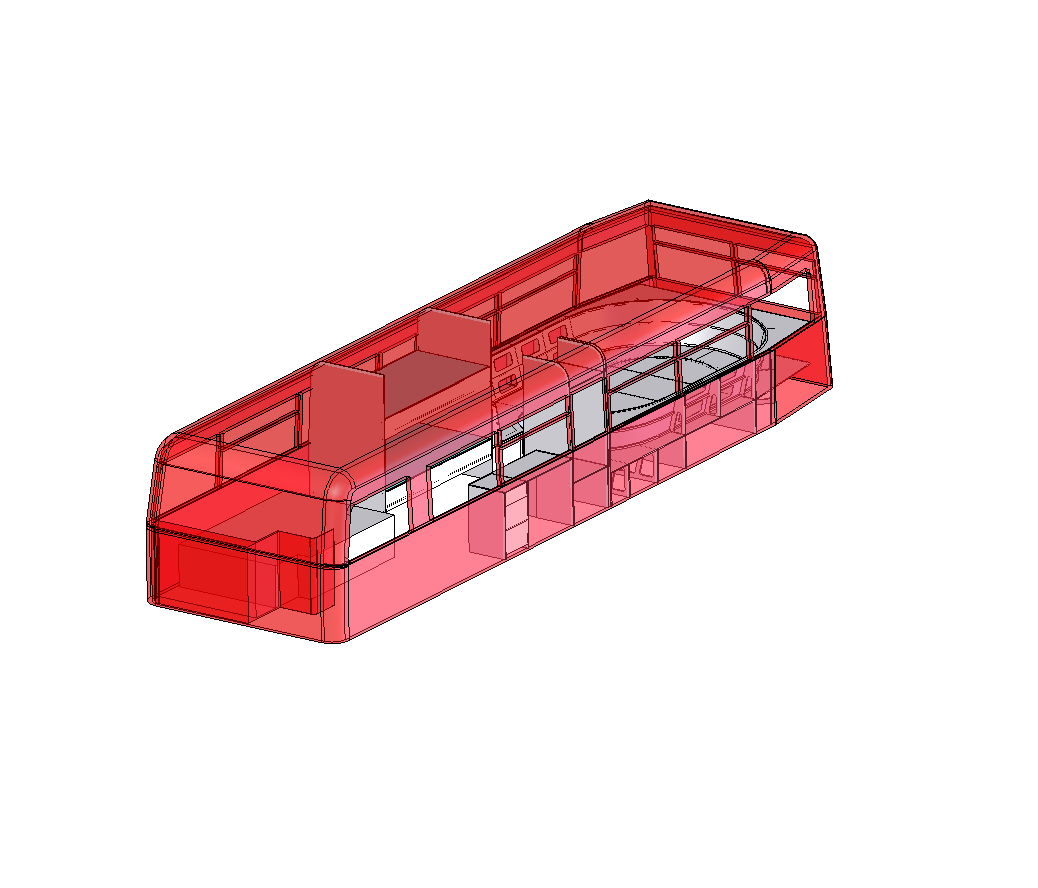
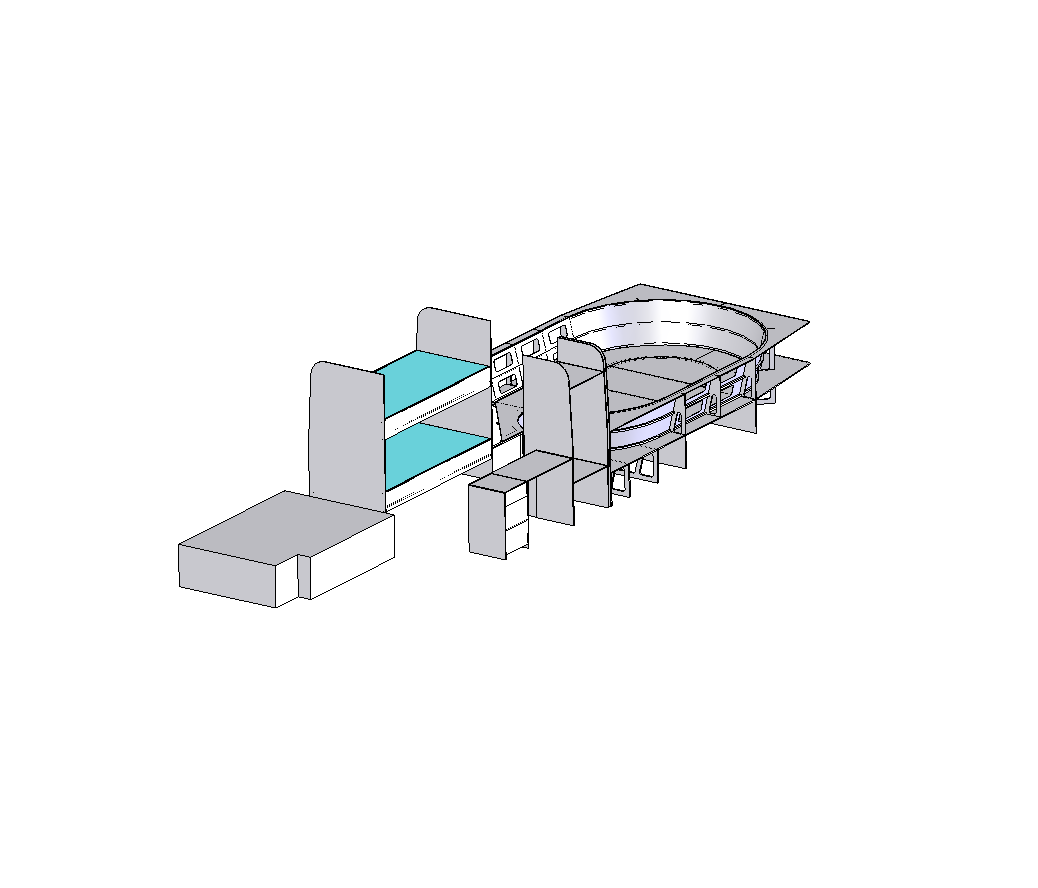
The front section comprises of the first three full length window bays. The concept is for a fitted horseshoe shaped sofa which will acts as the main day area on the bus. Under seat storage should be able to provide something in the region of 16 cubic feet of storage. The bridging pieces will be stored beneath the seats which can be used to form a large double bed. The area will probably contain any AV equipment such as TV and stereo. Roller blinds are mounted within the seats pull upwards through slots in the snug top to cover the windows being held in place by small hooks.
The half bay and subsequent full width bay on the nearside of the bus are both fitted with fixed windows. Against these would be full width single bunk beds. Storage beneath the lower bunk.
The offside half bay will have a full height cupboard fitted up against it. The cupboard and bunk headboard provide a fairly solid wall separating the rest of the upper deck, a curtain stored in the cupboard can be pulled across to complete the privacy of the front section.
The full width bay on the offside behind the cupboard will contain a desk. Standard chair below desk. Any drawers fitted to the desk will need to be retained with some form of lock. Provision of power supply for laptops, etc... A blind to be recessed into the back of the desk in a similar manner to the snug.
At the rear of the bus squeezed between the staircase and side wall, as wide a bed as can be expected. This is needs to act as a double bed and may require an odd shaped mattress due to the restrictions imposed by the stairwell. Storage space beneath bed. Any space between bunk's and double bed to be filled by cupboards that rise to the bottom of the windows.
The concept for the lower deck is the 'working' spaces, ie. kitchen, toilet and dining room. Provision also has to be given in this section to the final two berths. Another aim is to allow access to the kitchen and bathroom without having to pass through a bedroom area. Need to leave the bell cord along the roof of the nearside, even if this does mean running it through the middle of a bathroom!
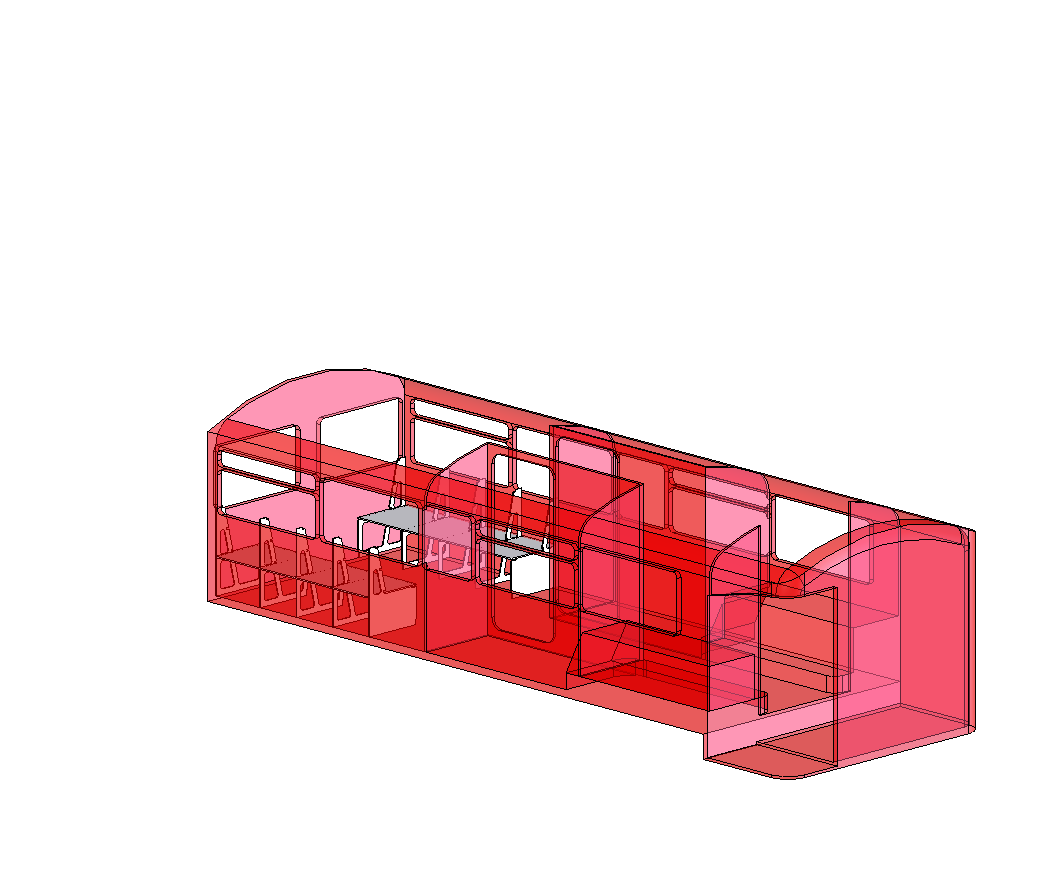
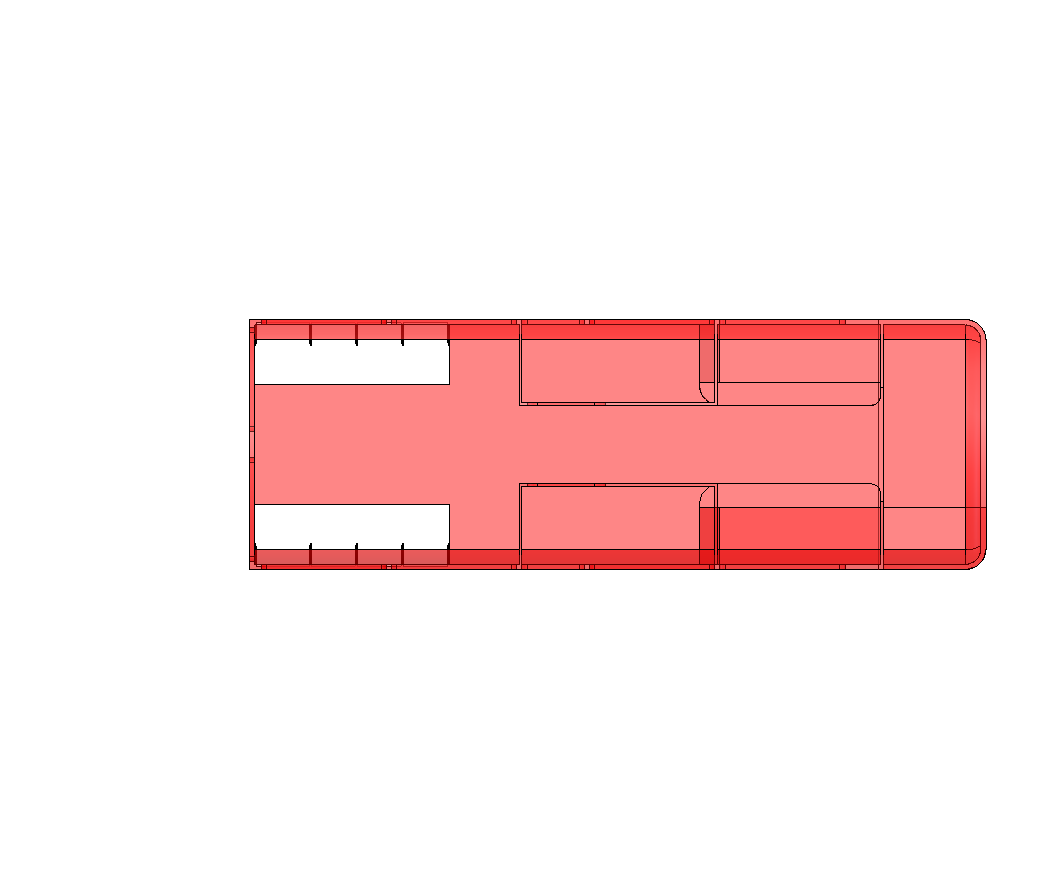
The front section covers the first two full width bays. Comprising of two bench seats running down either side of the bus width a central table that can be lowered to provide a full width bed. Storage space below the bench seats as well as access to the hatches to the gearbox and fuel pipe. The bench seats only need to be about 8' long, probably less to accommodate 4 people comfortably, therefore the additional space might be utilised by either of the subsequent two sections. Upwards pulling blinds to be located in the back of the bench seats pulling through slots in the top. Need to work out a suitable mechanism for supporting the table and raising/lowering it.
Comprising of the half width bay and the single bay behind it, the bathroom area will consists of two rooms. Each of the rooms would be approximately 6'x2'6", the width of the room being determined by a continuation of the steps around the rear wheel arches. The nearside room would contain toilet facilities whilst the offside would contain a shower and sink. The corridor between the two rooms links the kitchen with the dining area, a curtain can be pulled across to provide the dining area with privacy. If necessary the rooms could be extended forward across the half width bay to provide more room. Toilet facilities would need to be some form of chemical toilet. Fresh water and non-sewage waste water to be stored in tanks below the floor.
Built over the rear wheel arches the kitchen needs to comprise of the a cooker, sink, refrigerator and some work surfaces. Cupboards mounted above the windows provide storage space, along with cupboards up the sides between the final window bay and the wall to the rear platform. Care needs to be taken in this area since the wheel arches are structural and support the rear suspension springs. If it proves impossible to fit a refrigerator into this space then it should be moved down to the dining area where there should be ample room.
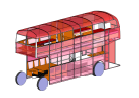
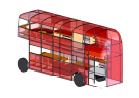
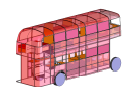
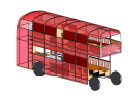
 15.6Mb Movie